
Watersheds
Our upstream work
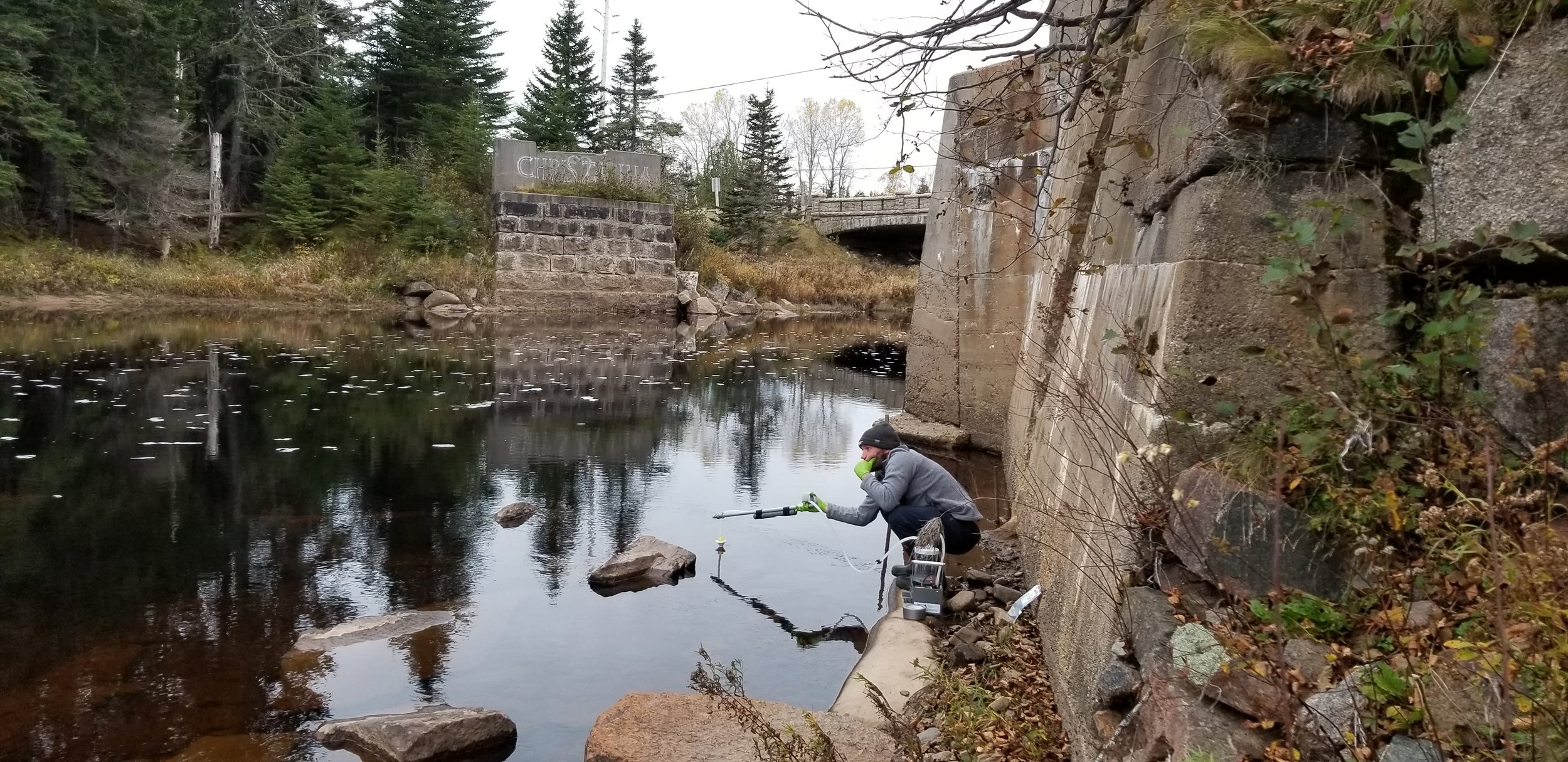
Between the Wolastook Saint John River and the Skutik St. Croix River lies West Fundy Composite watershed, made up of eight primary rivers and a host of lakes and tributaries. Here we measure water quality, track invasive species, research species at risk, and much more.
Active Work
West Fundy Watersheds
Since 1993, ECW has collected data on the health of freshwater ecosystems in the West Fundy Composite of watersheds. Stretching from Lepreau to the Digdeguash, in Eastern Charlotte County, New Brunswick, this composite of watersheds feeds Passamaquoddy Bay and the Fundy Isles from the edge of the Saint John watershed to the southwest.
Lake Utopia Rainbow Smelt: A Species At Risk
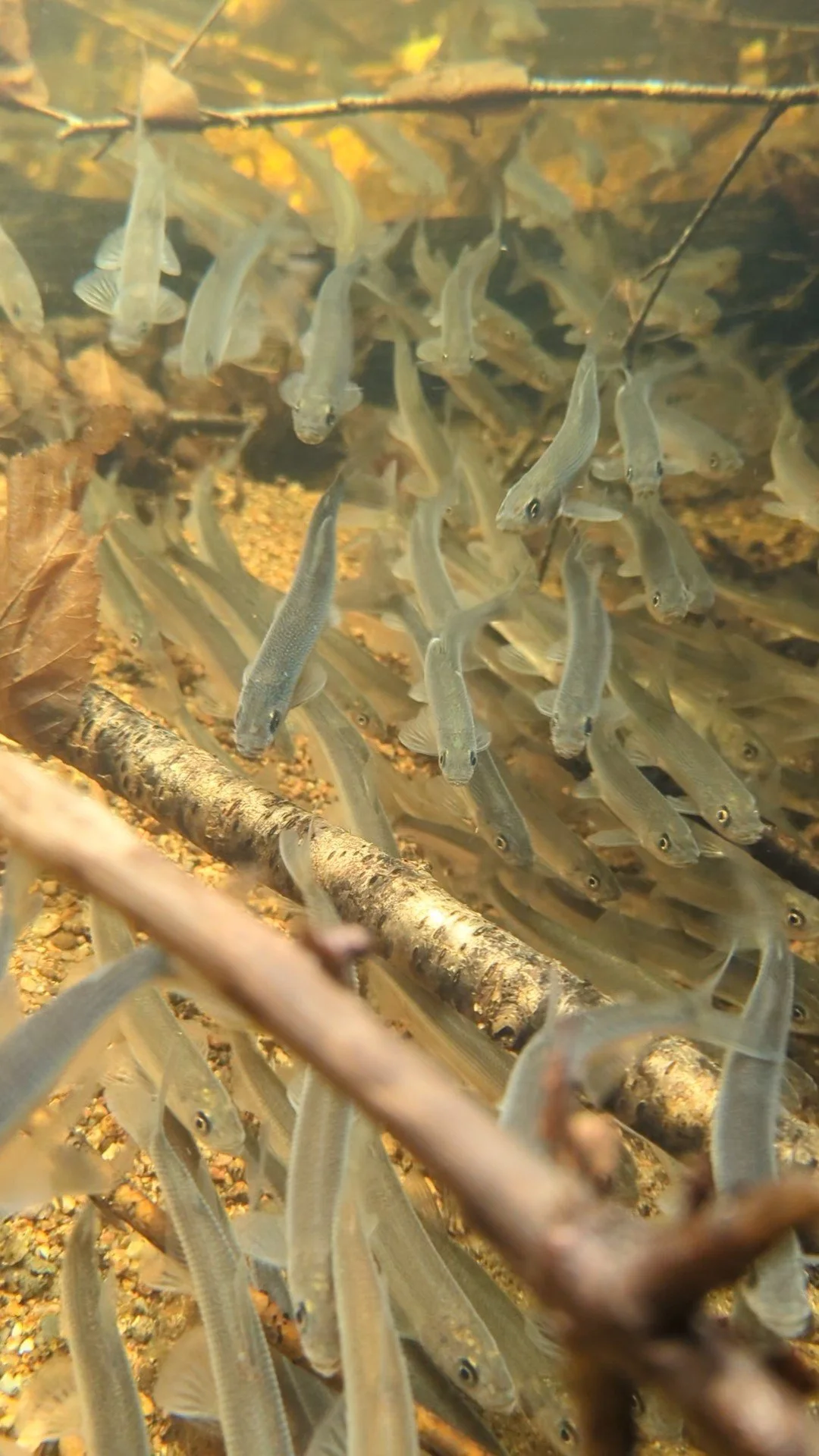
The rainbow smelt (Osmerus mordax) populations in Lake Utopia are endemic, meaning they are cut off from the other populations of smelt which inhabit the rest of the rivers and coastlines in New Brunswick. These Lake Utopia Rainbow Smelt (LURS) populations are endangered. Since 2018, ECW has been working with DFO to test new methods of determining the distribution of LURS in the streams that feed into the lake.

Restoration Planning
Restoration follows degradation, which can be caused by many different factors. We’ve been working to understand the priorities for restoration in our waterways so we can allocate our resources to the places that need it most.
More information coming soon!
Project Archive

Plastic Microfibers
Microplastics, or tiny plastic pieces are formed by the breakdown of plastic items in the environment, which is why it’s important to cut down on the plastics we purchase. In this effort we worked to raise awareness of the plastics that migrate during the laundry cycle from our synthetic clothing to the environment. We gave away over 250 laundry bags to help stop this, and installed filters at over 20 businesses.

Tracking Invasive Species
To better understand invasive plant species in New Brunswick, we have created an interactive map. The map presents the known occurrence records of priority invasive plant species in NB, and users can also report sightings of invasive species using the online tool. This information will be used to monitor the distribution of priority invasive species in New Brunswick and to determine where to focus control measures. This project was made possible through the financial support of Environment and Climate Change Canada's National Wetland Conservation Fund.

Invasive Plants in new Brunswick Wetlands
In 2016, ECW Inc. received funding from the National Wetland Conservation Fund to survey wetlands for priority invasive species. Invasive species such as Glossy Buckthorn (Frangula alnus) and Eurasian Water Milfoil (Myriophyllum spicatum) have the ability to spread aggressively, forming dense stands that restrict native wetland plants, and alter the structural and ecological values of wetlands.
This two-year project involved: (1) Surveying 15 inland wetlands, documenting the taxonomy, location, and density of identified invasive species; (2) The development of Best Management Practices (BMPs) and control strategies for Glossy Buckthorn (Frangula alnus) and Woodland Angelica (Angelica sylvestris); (3) The control of invasive plants identified in surveyed wetlands.
This project was made possible with the financial support of Environment and Climate Change Canada's National Wetland Conservation Fund.
Volunteer Invasive Plant Patrol
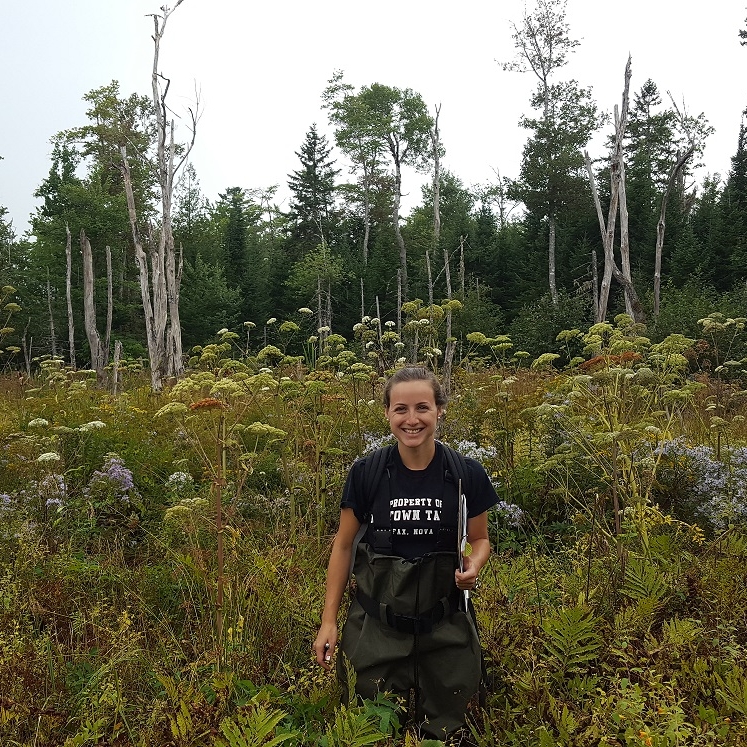
In 2016, ECW Inc. in partnership with New Brunswick Alliance of Lake Associations, launched the New Brunswick Invasive Plant Patrol Program. The program provides training, technical services, and resources to support volunteers in an effort to prevent the introduction and spread of invasive species in New Brunswick. Since then ECW Inc. has trained over 50 volunteers on how to properly identify priority invasive species, and conduct a screening survey on their lake. To learn more about this program, please visit www.nbala.ca.
This project was made possible through the financial support of the New Brunswick Environmental Trust Fund.

Chain Pickerel (Esox Niger)
In 2016, ECW Inc. received funding from the National Wetland Conservation Fund to survey wetlands for priority invasive species. Invasive species such as Glossy Buckthorn (Frangula alnus) and Eurasian Water Milfoil (Myriophyllum spicatum) have the ability to spread aggressively, forming dense stands that restrict native wetland plants, and alter the structural and ecological values of wetlands.
Today we still think about invasive chain pickerel, specifically in the context of how they interact with at-risk species like our beloved Lake Utopia Rainbow Smelt.